


Packaged food products are foods that are processed, prepared, or preserved and then sealed in containers or wrappers to keep them safe, fresh, and ready for distribution or consumption. This includes items such as snacks, spices, ready-to-eat meals, beverages, canned goods, condiments, and other shelf-stable products that meet international packaging and safety standards.
During cargo shipment, packaged food products undergo a series of steps such as quality inspection, documentation, labelling, customs clearance, and loading into temperature-controlled or dry cargo containers. Proper packaging is essential to protect food items from moisture, contamination, and damage during transit.
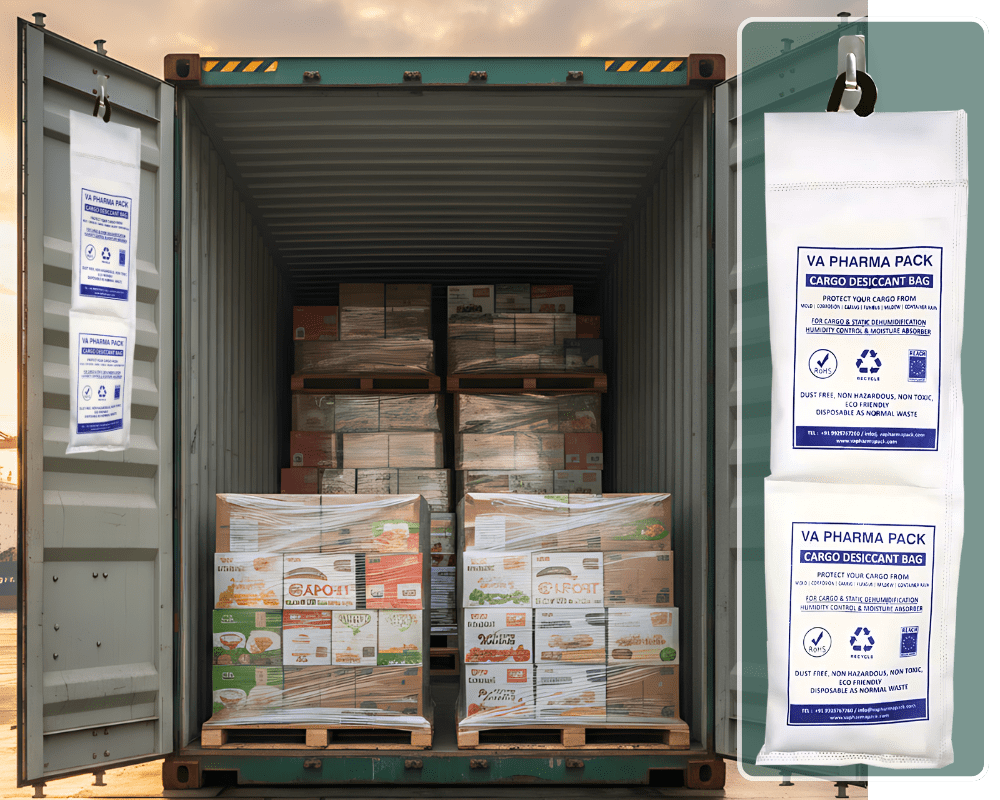
The export process must comply with the regulations of both the exporting and importing countries, including food safety certifications, ingredient disclosures, expiry dates, and packaging norms. Efficient cargo handling ensures that packaged food products maintain freshness, stability, and quality throughout the journey, enabling seamless global distribution.
Packaged food humidity protection is crucial, as moisture poses a significant risk during container shipments. Excess humidity, condensation, and water exposure can directly affect product quality, packaging integrity, and overall shelf life, making it essential for maintaining the safety and stability of packaged food products throughout international transit.
During packaged food exports, high humidity can weaken cartons, labels, wrappers, and outer packaging materials. Softened or damaged packaging increases the chances of tearing, collapsing, or crushing during handling.

Moisture creates an environment that supports mold and fungal growth. Contaminated packaged foods or products may become unfit for sale and can lead to shipment rejection at the destination port.
Temperature fluctuations during sea freight often cause container “sweating”. This condensation can settle on packaged food products, increasing the risk of spoilage and reducing product longevity.

Excess moisture accelerates chemical and microbial activity in packaged food products during exports, leading to decreased freshness, flavour changes, and shorter shelf life.
During the packaged food exports, water can cause labels to peel or smudge, resulting in scanning errors, misidentification, and complications during customs inspection or warehouse handling.

Packaged food shipments damaged by moisture may be rejected by buyers, leading to financial losses, shipment delays, and insurance claims.
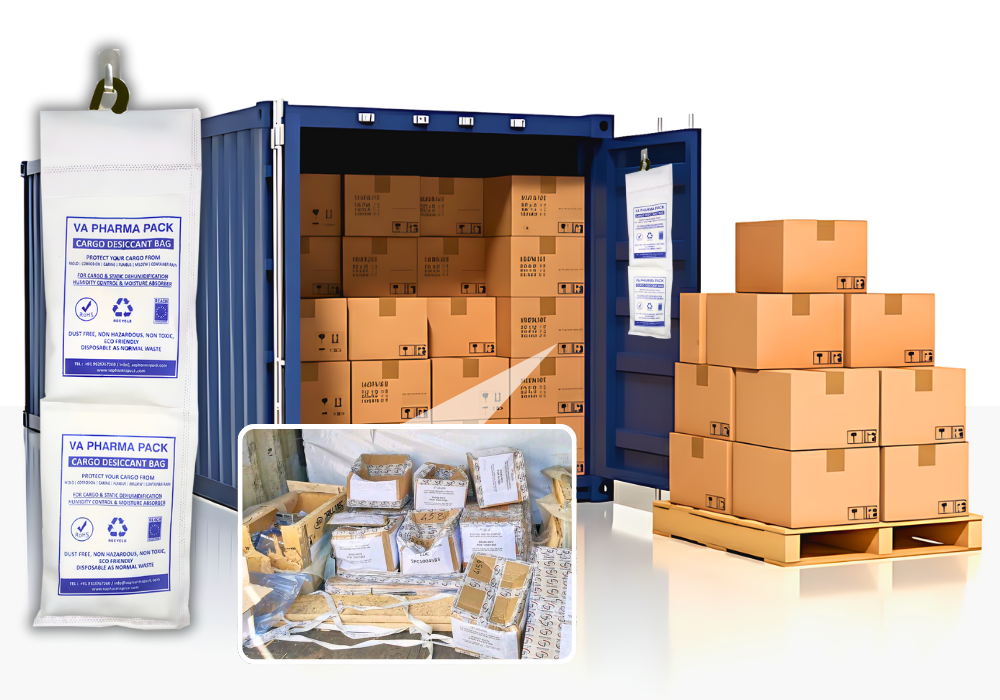
Packaged foods are highly sensitive to moisture, and even small humidity levels can impact product stability. Desiccants help maintain ideal dryness inside packaging, preventing mold growth, texture changes, clumping, and flavor loss. By controlling moisture, desiccants extend shelf life, protect nutritional value, and maintain product quality during storage and transportation.
Cargo desiccant bags are engineered to absorb excess moisture from enclosed spaces, ensuring a controlled humidity environment throughout the shipping process.
Desiccant bag for packaged food exports contain advanced moisture-absorbing compounds such as calcium chloride or silica-based materials. contain advanced moisture-absorbing compounds such as calcium chloride or silica-based materials. These compounds trap and lock moisture, transforming it into a gel-like form to prevent leakage. Continuous absorption ensures stable humidity levels even in challenging maritime conditions during the export of packaged foods.
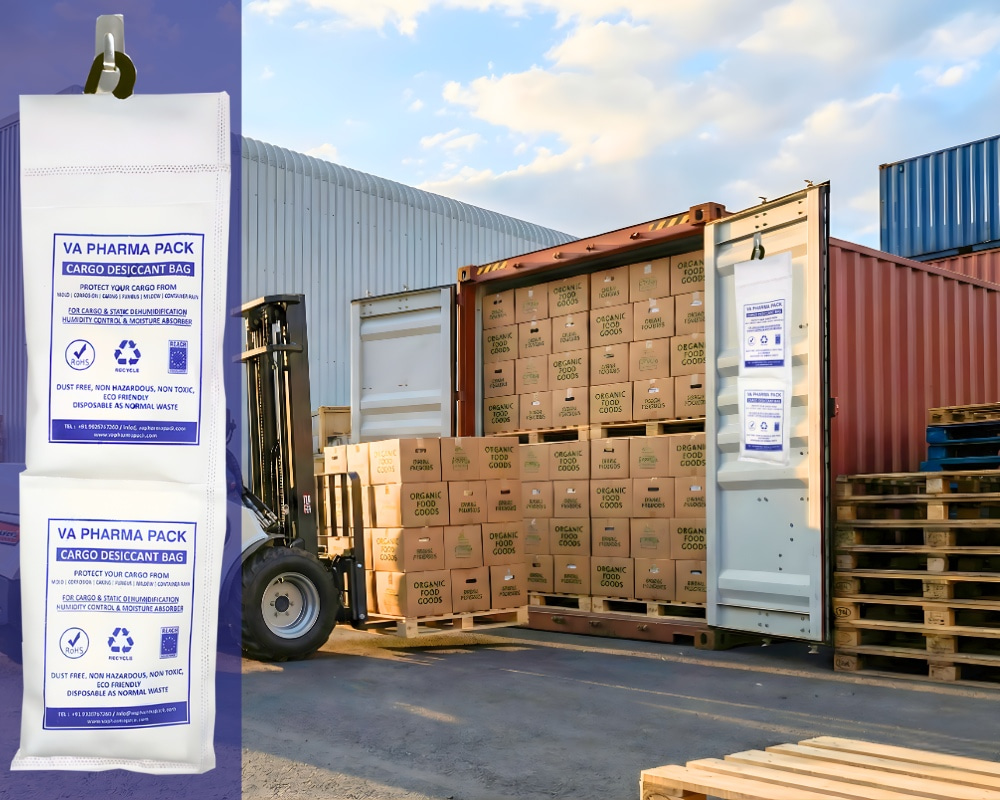

Container Cargo Adsorbent is a unique product designed specifically for shipping & transportation industry.
Survey No.346/P, At. & Post : Raniya,
Before Omori India Pvt. Ltd.,
Savli, Vadodara,
Gujarat-391780, India.
+91 992 576 7260
Copyright © VA Pharma Pack. All Rights Reserved | Website Designed & Seo by Dhavat Infotech Pvt. Ltd.