


(Canned Goods, Ready to Eat, Ready to Cook, Packaged Food)

Moisture is one of the major factors that can affect the quality, safety, and shelf life of canned goods, ready-to-eat meals, ready-to-cook products, and packaged food items during export and long-distance transportation. High humidity levels inside shipping containers or storage environments can cause several problems that may lead to product damage and financial losses.
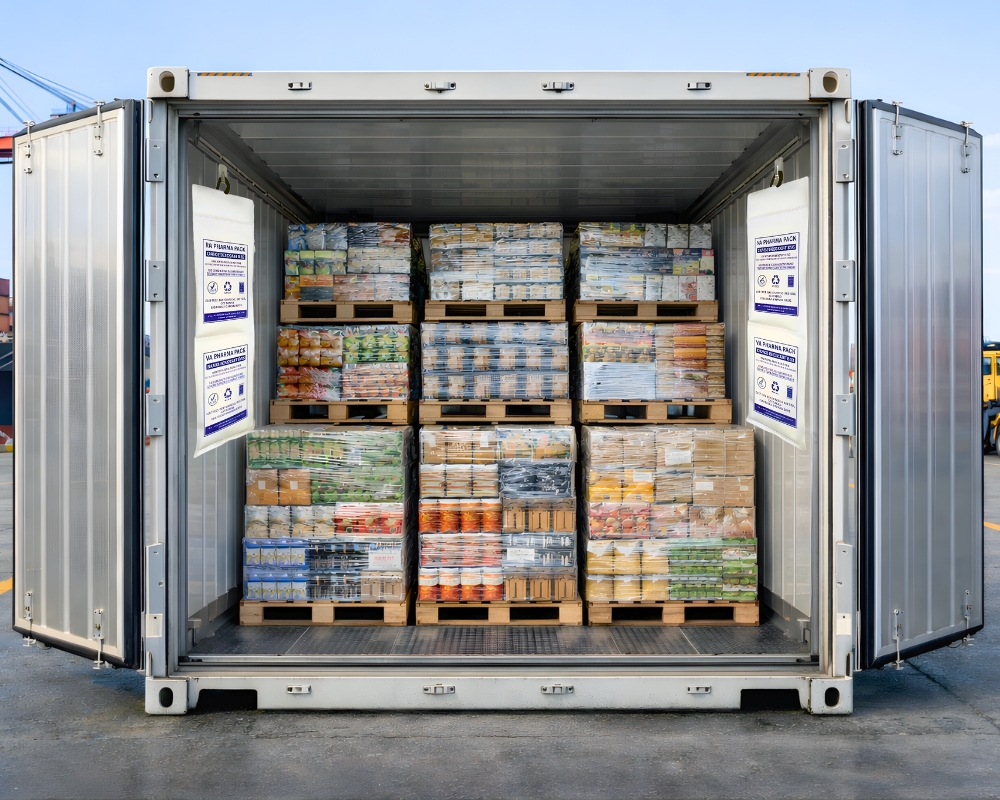
Excess moisture can weaken corrugated cartons, paper packaging, and flexible food packaging materials. When cartons absorb humidity, they lose strength, become soft, and may collapse during stacking or handling in transit.
High humidity levels create favorable conditions for the growth of mold, mildew, and bacteria on packaging materials. This can lead to contamination risks and affect the hygiene and safety standards required for food exports.
During international shipping, temperature differences between day and night can cause condensation inside containers, known as container rain. Water droplets can fall onto cartons and packaged goods, causing moisture damage and product deterioration.
Food export packaging often includes printed labels, barcodes, and regulatory information. Moisture can cause labels to peel off, ink to smudge, or packaging prints to fade, which may create compliance issues in international markets.
Moisture exposure can negatively affect the taste, texture, freshness, and appearance of packaged food products. Ready-to-eat and ready-to-cook items may lose crispness and flavor if exposed to excess humidity.
High moisture levels accelerate spoilage, oxidation, and product degradation, which reduces the shelf life of food products during long shipping periods and storage.
Moist environments may attract insects and pests, which can damage packaging and compromise the safety and quality of food products.
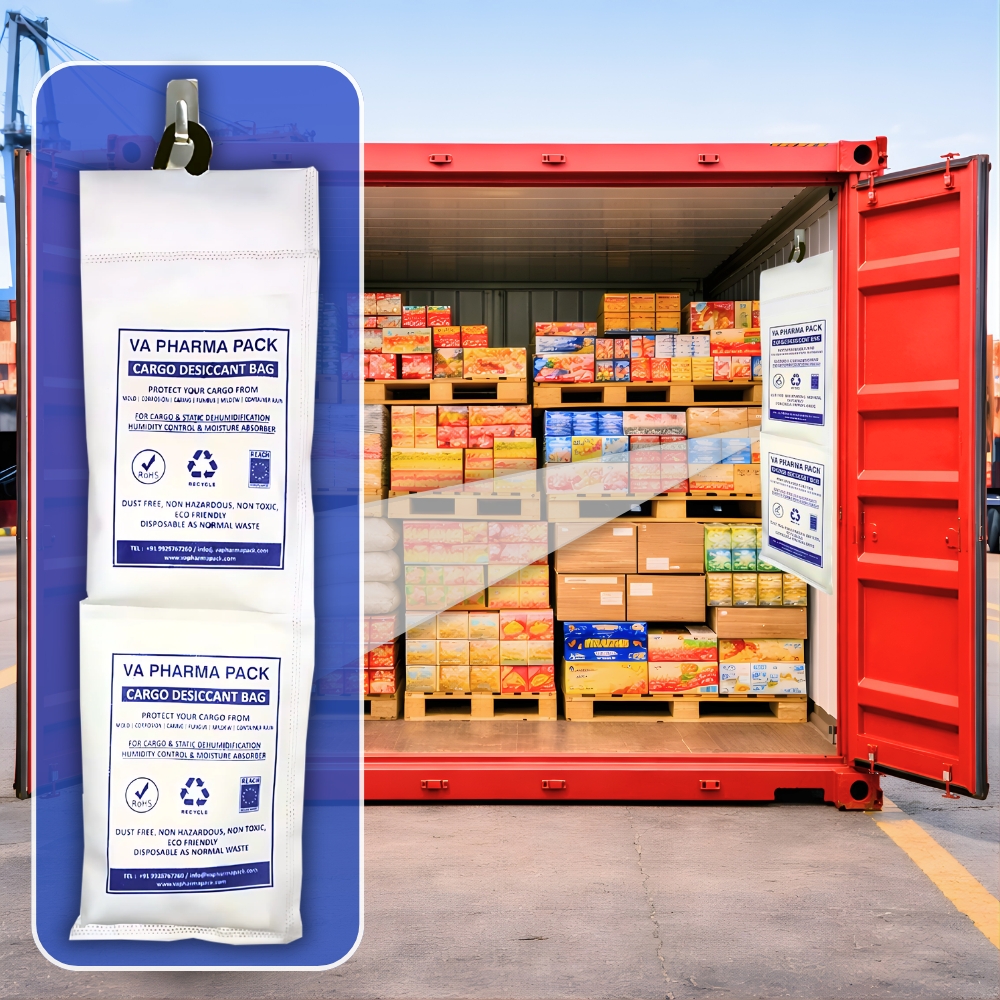
USFDA-compliant cargo desiccants are food-safe moisture-absorbing materials designed to control humidity inside shipping containers and packaging. VA Pharma Pack is a USFDA-compliant cargo desiccant manufacturer based in India. These desiccants are manufactured with non-toxic, inert materials and comply with food safety regulations, ensuring they do not contaminate food products during storage or transportation.
They are commonly made from materials such as:
These materials absorb moisture from the surrounding air and reduce the risk of mold, mildew, and product spoilage.
High-quality desiccants used for food export typically include the following features:
Manufactured according to FDA regulations such as CFR 21, ensuring safe use with food and pharmaceutical products.
Food-grade desiccants are odorless, non-hazardous, and chemically stable, preventing contamination of packaged foods.
Some cargo desiccants can absorb 200–300% of their own weight in moisture, making them effective during long export journeys.
Desiccants are sealed in Tyvek or food-grade non-woven fabric that prevents dust or particles from contaminating food products.
Many modern cargo desiccants are biodegradable or environmentally friendly and can be safely disposed of after use.
Cargo desiccant bags are widely used during the transportation and storage of food products to control moisture inside shipping containers. Container moisture absorber for food shipping, plays an important role in preventing moisture-related damage during global shipments. Moisture buildup during long-distance shipping can lead to container rain, condensation, mold growth, and packaging damage. Using cargo desiccants helps maintain product quality and protects food items during export.

Cargo desiccant bags absorb excess humidity inside shipping containers during long sea voyages. Cargo desiccant manufacturer for food export in India ensures prevention of condensation that can damage cartons, labels, and outer packaging of canned goods, ready-to-eat meals, ready-to-cook food, and packaged food products.
Temperature fluctuations during transit cause condensation inside containers, commonly known as container rain. Cargo desiccant bags capture moisture before it forms water droplets, protecting food packaging and preventing spoilage risks.


Many food products are packed in corrugated cartons, paper boxes, or flexible packaging that is sensitive to humidity. Cargo desiccant bags prevent moisture absorption that can weaken packaging and lead to crushing or deformation during shipping.
High humidity can promote mould and microbial growth on outer packaging materials. Cargo desiccant bags help maintain a dry environment inside containers, reducing the risk of contamination and ensuring compliance with food safety standards.


Stable humidity levels inside shipping containers help preserve the quality and shelf life of packaged food products. By controlling moisture, cargo desiccant bags help prevent deterioration of packaging and maintain the integrity of food items.
Food export packaging often contains printed labels, barcodes, and regulatory information. Excess humidity can cause ink smudging or label peeling. Cargo desiccant bags help keep labels intact and readable throughout the shipping process.


Food exports often involve long transit times and multiple climate zones. Cargo desiccant bags ensure stable conditions inside containers, helping maintain the quality of canned goods, ready-to-eat foods, ready-to-cook products, and other packaged food items during international shipping.

Container Cargo Adsorbent is a unique product designed specifically for shipping & transportation industry.
Survey No.346/P, At. & Post : Raniya,
Before Omori India Pvt. Ltd.,
Savli, Vadodara,
Gujarat-391780, India.
+91 992 576 7260
Copyright © VA Pharma Pack. All Rights Reserved | Website Designed & Seo by Dhavat Infotech Pvt. Ltd.