


Moisture is one of the most critical factors affecting the quality, safety, and market value of agricultural commodities during storage and transportation. Excess moisture can lead to significant product deterioration, resulting in financial losses and reduced export quality.
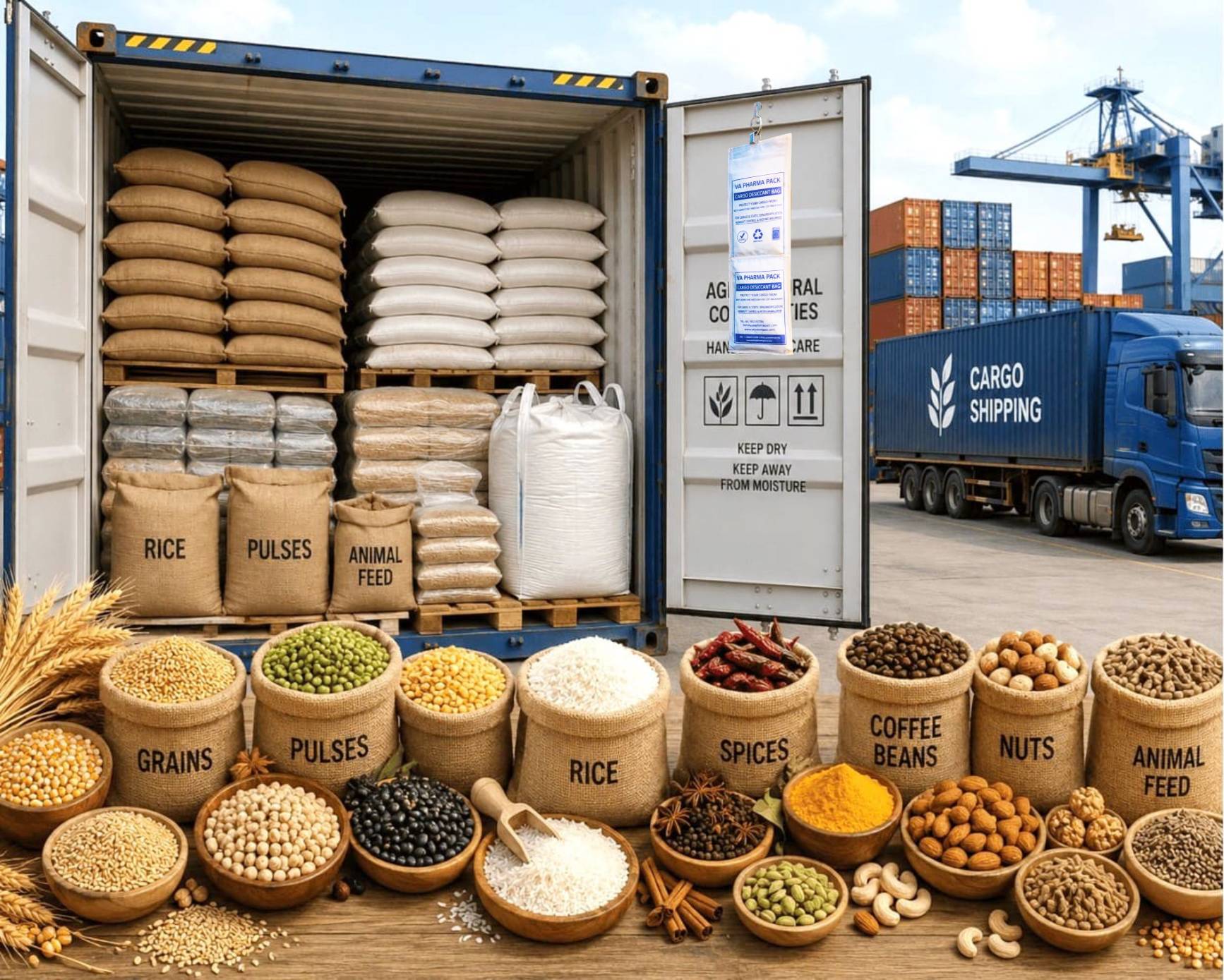
High humidity and moisture levels create favorable conditions for mold growth, fungal contamination, and bacterial activity. Commodities such as grains, pulses, rice, spices, coffee beans, nuts, and animal feed are particularly vulnerable to moisture-related damage. Increased moisture can also trigger discoloration, caking, clumping, unpleasant odors, and loss of nutritional value.
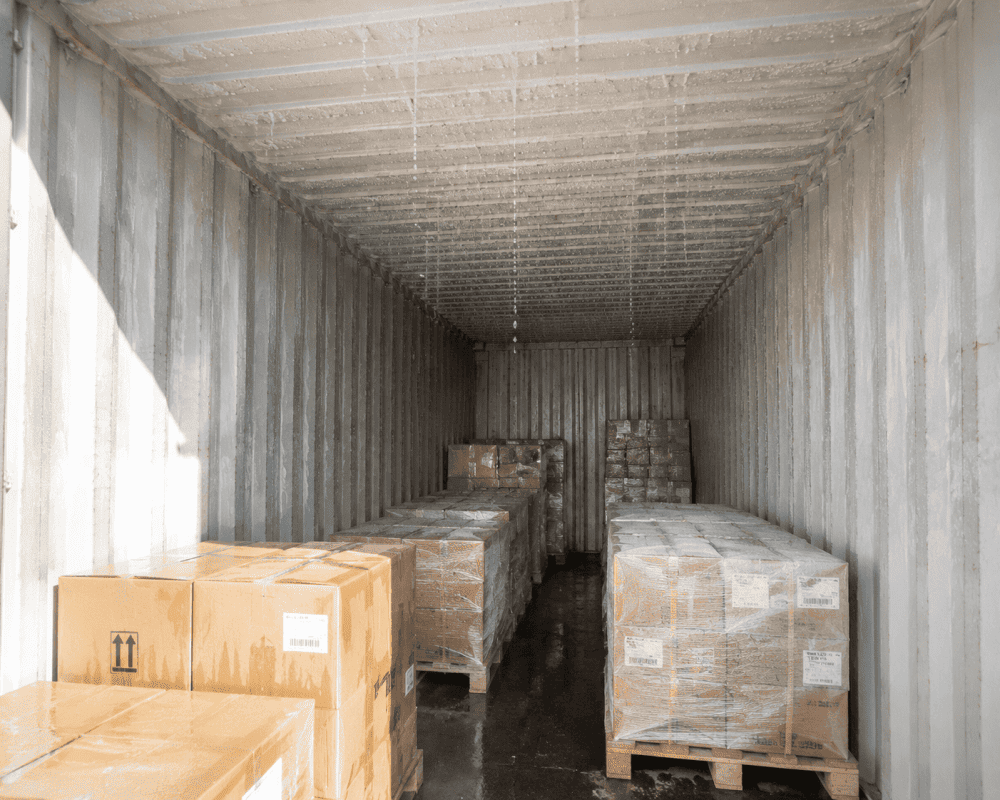
During international shipments, temperature fluctuations often cause condensation inside containers, commonly known as "container rain." Water droplets formed on container walls and ceilings may fall directly onto cargo, causing wetting, spoilage, and packaging damage. Moisture accumulation can also promote insect infestation and accelerate product degradation.
Effective moisture management helps preserve commodity quality throughout the supply chain. Maintaining appropriate humidity levels during storage and transit minimizes the risk of condensation, protects product integrity, and supports compliance with international quality standards. Moisture control solutions such as cargo desiccants, proper packaging, and ventilation systems play a vital role in safeguarding agricultural commodities from moisture-related damage.
Proper moisture protection contributes to improved product quality, reduced losses, and successful delivery of agricultural commodities to domestic and international markets.





Effective moisture management is essential for protecting agricultural commodities from quality deterioration during storage and international transportation. Humidity Protection for Agricultural Shipments plays a crucial role in minimizing the risks associated with excess moisture, condensation, and temperature fluctuations, which can lead to mold growth, spoilage, packaging damage, and significant financial losses. The best moisture control solution for agricultural exports is cargo desiccant bags. Cargo desiccant bags are widely recognized for their ability to absorb excess moisture, prevent container rain, and maintain product quality throughout the export supply chain. By providing effective Humidity Protection for Agricultural Shipments, these moisture control solutions help preserve commodity integrity, reduce export risks, and support compliance with international quality standards.
Absorb excess moisture and prevent container rain to protect your valuable agricultural commodities.
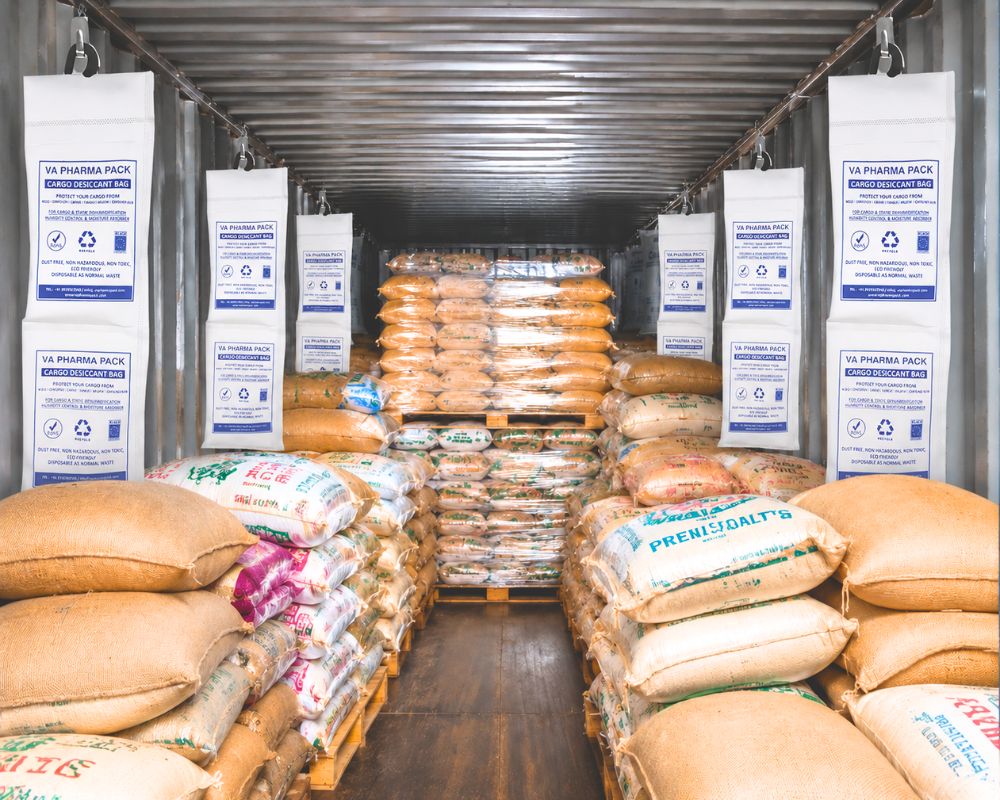
Strengthens protection and reduces moisture penetration during storage and transit.
Controls humidity levels inside containers for safer transportation.
Agricultural commodities are highly sensitive to moisture fluctuations during transportation and storage. Long transit periods, changing temperatures, and varying humidity levels inside shipping containers often create condensation, commonly known as container rain, which can damage cargo quality and reduce market value. Desiccant Bags for Agricultural Commodities are widely used to absorb excess moisture, prevent condensation, and safeguard agricultural exports from moisture-related damage throughout the supply chain.
Cargo desiccant bags absorb excess humidity generated from commodity moisture content and external environmental conditions. By reducing relative humidity inside containers, desiccants help prevent condensation formation on container walls, ceilings, and cargo surfaces during long-distance shipments.
Many agricultural products are susceptible to mold, mildew, and fungal contamination when exposed to elevated moisture levels. Cargo desiccant bags help maintain a drier environment, reducing the risk of microbial growth and preserving product quality during transit.
Excess moisture can lead to discoloration, caking, spoilage, and deterioration of agricultural commodities. Cargo desiccant bags help maintain the original appearance, texture, aroma, and quality of products throughout the export journey.
Moisture accumulation inside containers can weaken cartons, sacks, paper packaging, and wooden pallets. Cargo desiccant bags minimize humidity-related packaging damage, helping ensure cargo arrives in good condition and reducing handling losses.
Importers and regulatory authorities often enforce strict quality standards for agricultural products. Moisture damage can result in cargo claims, rejections, or financial losses. Effective moisture management with cargo desiccant bags helps support compliance with quality requirements and export standards.
Cargo desiccant bags are commonly used during the export of Rice, Wheat, Maize (Corn), Pulses and Lentils, Soybeans, Peanuts, Coffee Beans, Cocoa Beans, Tea, Spices, Animal Feed, Seeds, Dry Fruits and Nuts.
By controlling moisture throughout transportation and storage, cargo desiccant bags contribute to improved cargo protection, reduced spoilage, lower claim rates, and enhanced customer satisfaction in international agricultural commodity trade.
Effective moisture solutions play a vital role in maintaining the quality and safety of agricultural commodities, ensuring products reach domestic and international markets in optimal condition.
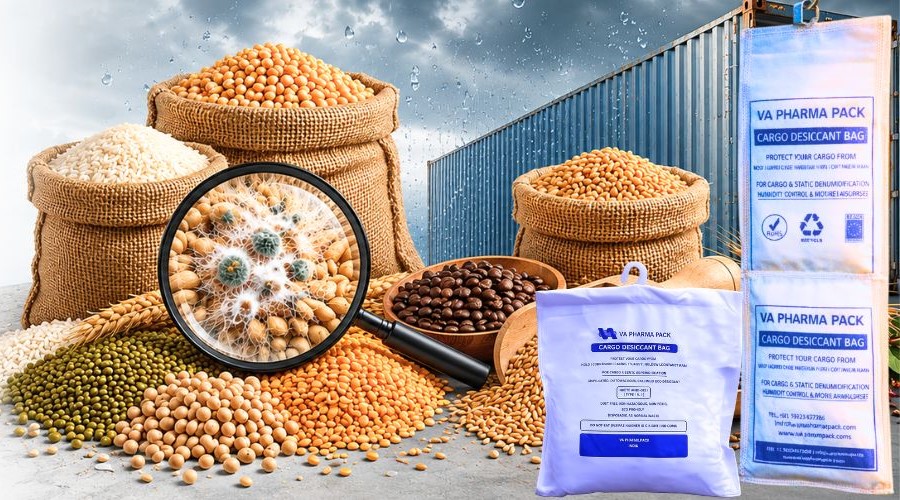

Container Cargo Adsorbent is a unique product designed specifically for shipping & transportation industry.
Survey No.346/P, At. & Post : Raniya,
Before Omori India Pvt. Ltd.,
Savli, Vadodara,
Gujarat-391780, India.
+91 992 576 7260
Copyright © VA Pharma Pack. All Rights Reserved | Website Designed & Seo by Dhavat Infotech Pvt. Ltd.