


Global shipment of metal parts, automotive components, and industrial machinery involves exposure to fluctuating temperatures, humidity, and long transit durations. These conditions often lead to condensation, corrosion, and surface degradation—resulting in financial losses and compromised product integrity.
Without proper protection, this leads to container rain, rust, corrosion, and costly damage.
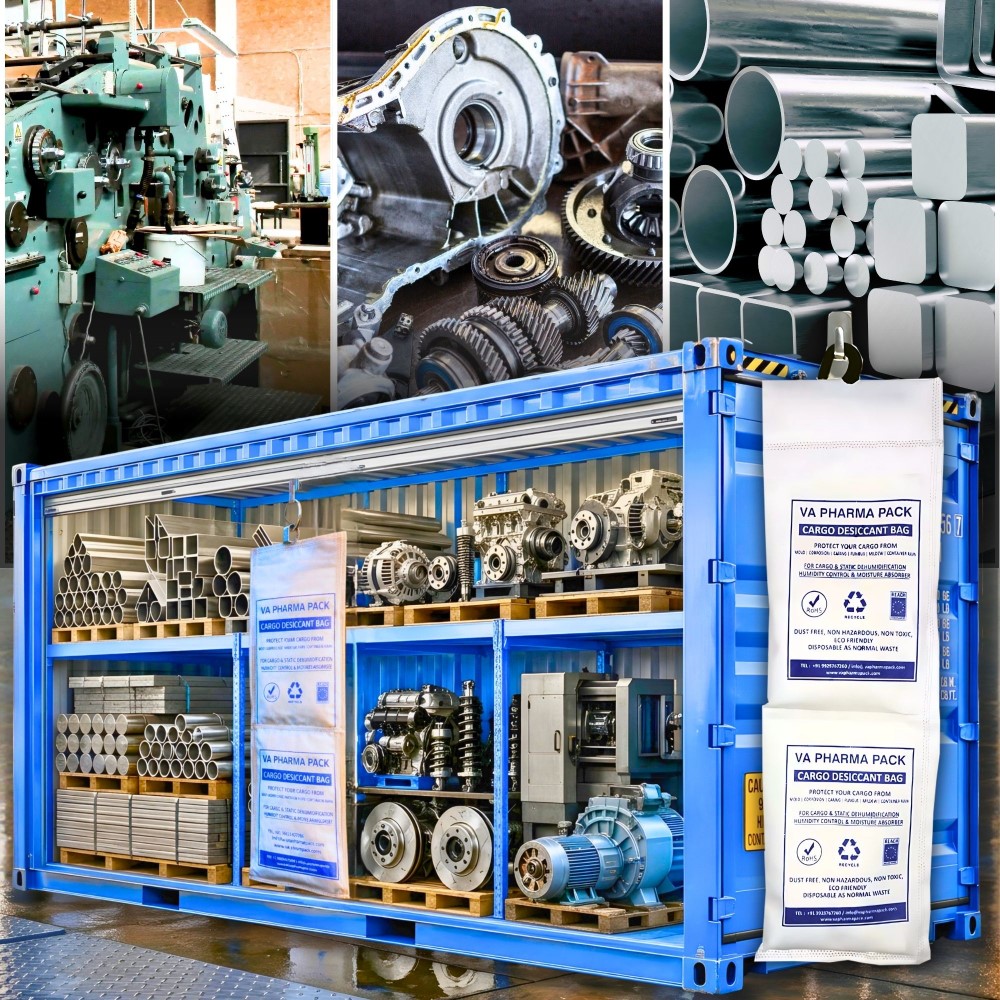
Cargo desiccant bags provide a powerful, reliable solution to control moisture and safeguard valuable export shipments during transit.
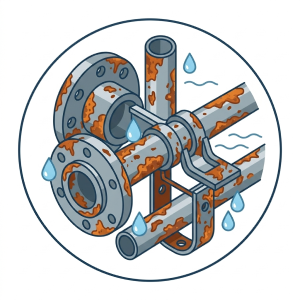
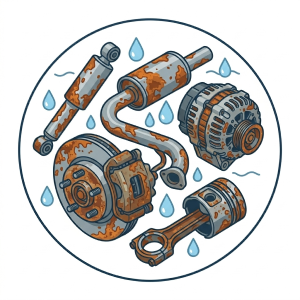
During transit, especially across oceans, temperature differences between day and night create condensation inside containers—commonly referred to as “container rain.” This moisture settles on metal surfaces, leading to:



Cargo desiccant bags are high-absorption moisture control products designed specifically for shipping containers. Made with advanced materials like calcium chloride, they can absorb up to 200–300% of their weight in moisture.
These desiccants actively reduce humidity levels inside containers, preventing condensation and protecting goods throughout transit.
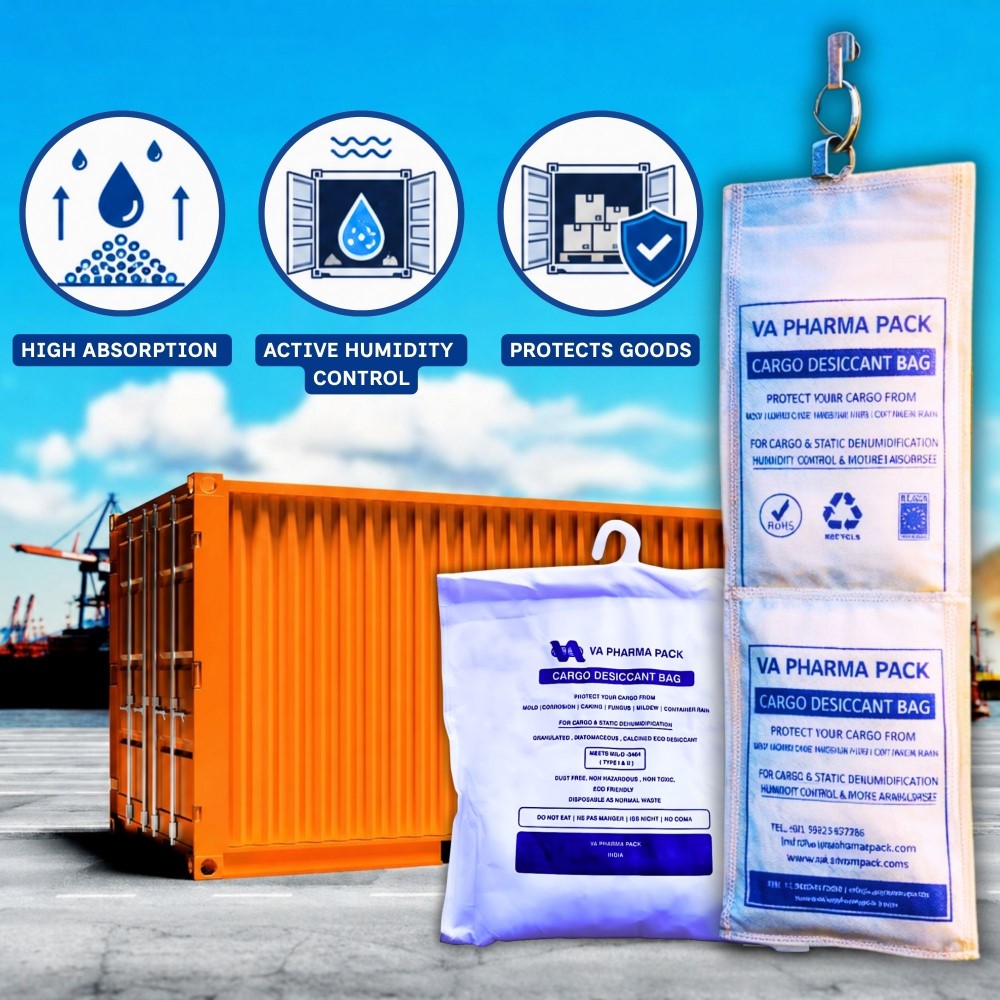

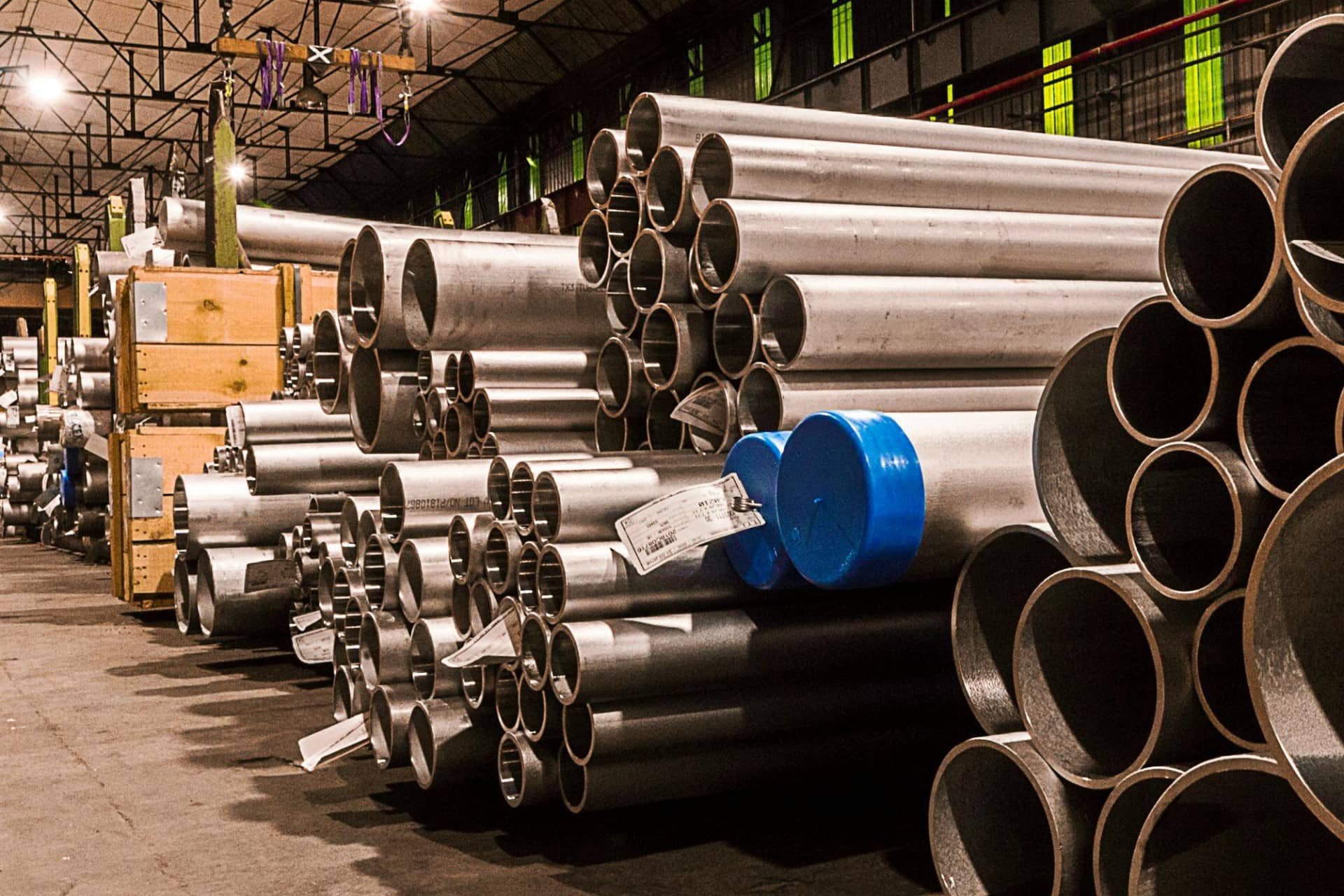
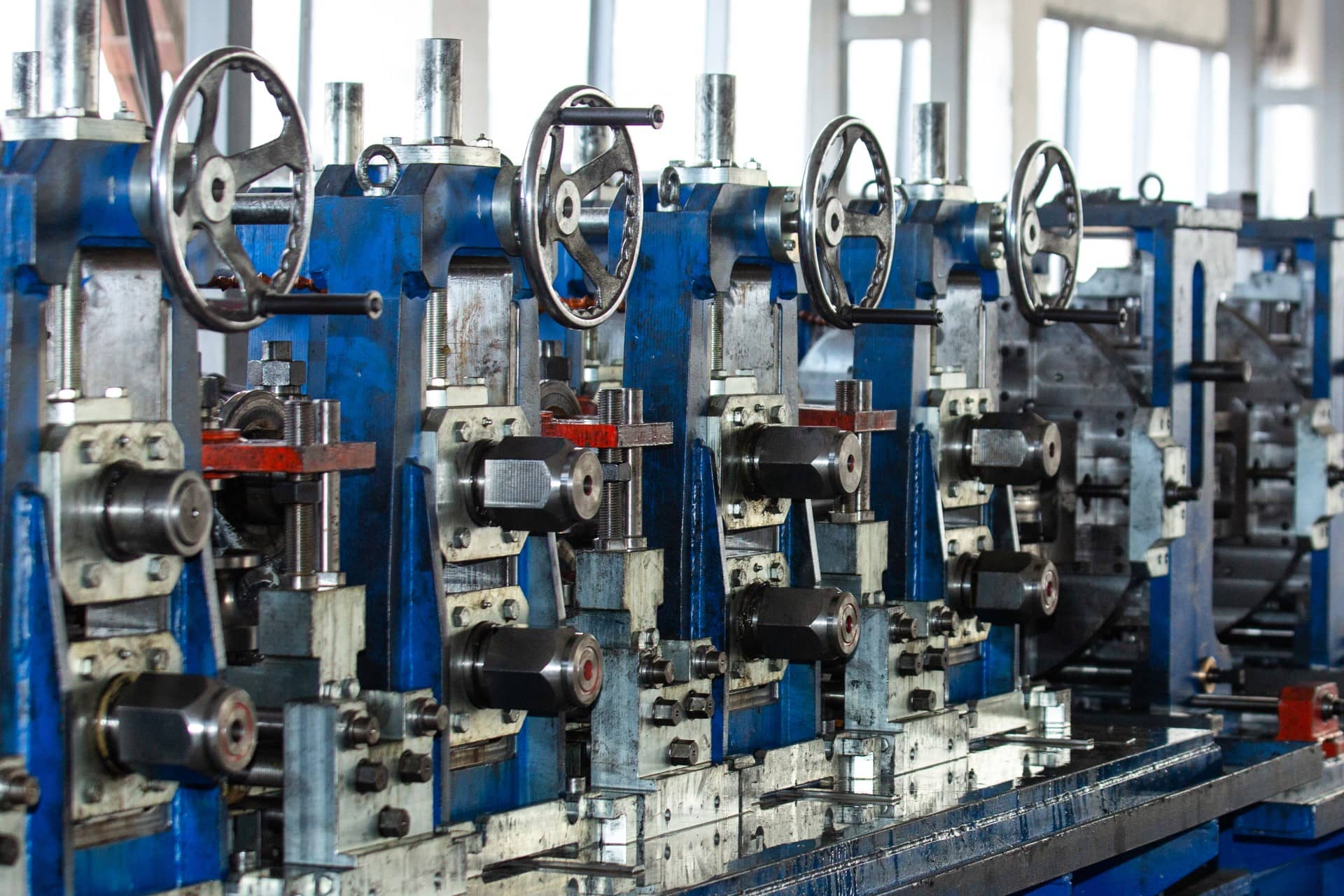
Exporters across the Middle East Countries, and global markets rely on cargo desiccant bags because they:
Cargo desiccant bags should be used strategically inside containers to ensure effective moisture control during export shipping of Metal, Automotive & Machinery. The bags are typically hung evenly along the container walls to allow uniform absorption of humidity throughout the enclosed space. The quantity of desiccant required depends on the container size, as well as the nature of the cargo being transported. Proper sealing of the container is essential to maximize the effectiveness of the desiccant, preventing external moisture from entering. For optimal results, desiccant usage should be combined with appropriate export packaging methods to provide comprehensive protection against humidity-related damage.
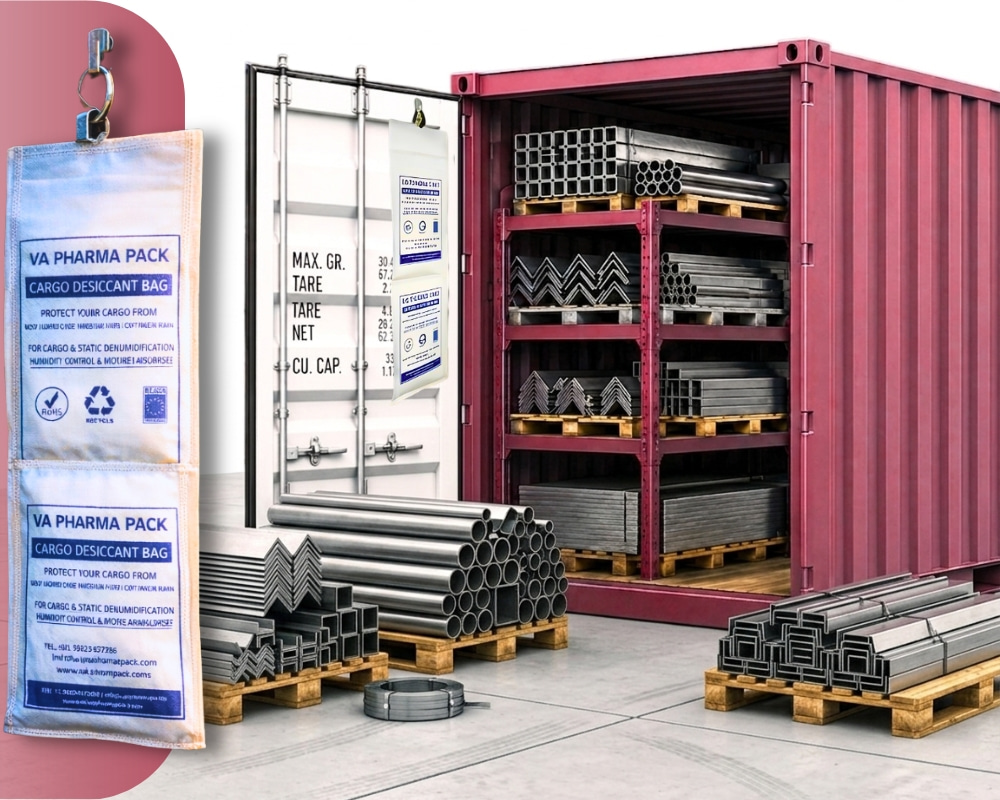
Advanced desiccant materials effectively absorb large volumes of moisture, ensuring a dry environment inside shipping containers.

Controls humidity levels to eliminate the risk of condensation buildup, commonly known as container rain, during transit.

Protects metal surfaces, automotive components, and machinery from oxidation, corrosion, and microbial growth.

Designed for quick and convenient placement, typically hung along container walls without requiring complex setup.

Minimizes potential damage, reducing financial losses, insurance claims, and product rejections.

Ensures consistent moisture control over extended shipping durations and varying climatic conditions.

Container Cargo Adsorbent is a unique product designed specifically for shipping & transportation industry.
Survey No.346/P, At. & Post : Raniya,
Before Omori India Pvt. Ltd.,
Savli, Vadodara,
Gujarat-391780, India.
+91 992 576 7260
Copyright © VA Pharma Pack. All Rights Reserved | Website Designed & Seo by Dhavat Infotech Pvt. Ltd.